
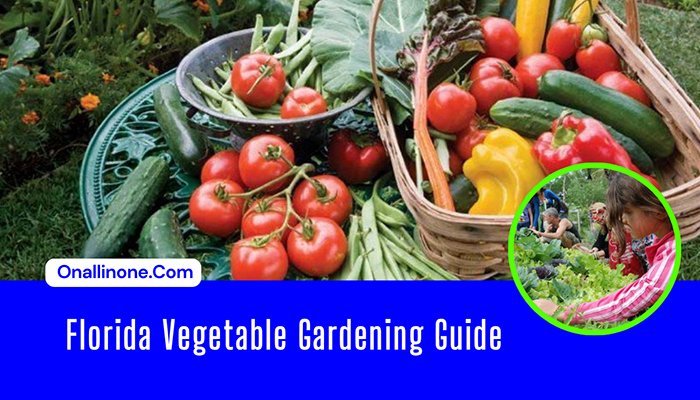
Florida Vegetable Gardening Guide
Why Florida Vegetable Gardening Is Different
If you moved from up north and tried following standard gardening advice here, you already know the problem – your summer crops melt, your timing feels wrong and the bugs never fully disappear.
Florida’s climate breaks most rules. This Florida vegetable gardening guide is built for that reality.
The Good News: Florida home gardeners can harvest every single month of the year. You get two warm-season planting windows, a generous cool season and a summer lineup of tropical crops most of the country can’t touch. The key is working with Florida’s rhythms instead of fighting them.
Florida spans USDA zones 8b-11b. Your exact planting calendar depends on whether you’re in North, Central, or South Florida – all 3 are covered below.
Step 1 – Know Florida’s Seasons (They Are Flipped)
The most important concept in vegetable gardening in Florida for beginners – the seasons are reversed from the rest of the country.
Most gardening here happens in fall, winter, and spring. Summer is for heat-tolerant crops or soil-building – not a time to force northern vegetables.
Florida runs on two macro-seasons – a dry season (November–April) and a wet season (May–October). The wet season brings intense heat, high UV and humidity that invites disease and pest pressure on most cool-weather vegetables.
| Region | Cool-Season Window | Warm/Hot Season |
| North Florida | Oct–Feb (brassicas, carrots, leafy greens) | Mar-May & Sep (tomatoes, beans, peppers) |
| Central Florida | Sep–Feb (full cool-season lineup) | Jan-Mar & Aug–Sep (tomatoes, cucumbers, corn) |
| South Florida | Nov–Mar (your prime growing window) | May-Oct (sweet potato, okra, tropical crops) |
South Florida gardeners essentially have an inverted calendar – the cool, dry months of November through March are your prime growing window.
North and Central Florida gardeners work around light frost risk from December through February.
Step 2 – Pick The Right Garden Setup
Three options work in Florida – raised beds, containers, or in-ground. The right choice comes down to budget and how much time you want to spend fighting Florida’s native sandy soil.
In-Ground: Affordable but requires serious soil prep. Florida’s sandy soil drains water and nutrients past roots too quickly, lacks organic matter, and often contains root-knot nematodes. Work 3–4 inches of compost into the top 6 inches before planting and plan to add more every season.
Raised Beds: Best quality control. Fill with a garden soil and compost blend (not potting mix). Aim for 12 inches deep minimum – 18 inches for tomatoes, peppers, and broccoli. They dry out faster, so consistent irrigation matters more.
Containers: Lowest barrier to entry. Use a 5-gallon minimum for most crops and 10-15 gallons for tomatoes or eggplant. Always use potting mix, never garden soil. Choose light-colored pots to reduce heat stress.
Beginner Tip: Start in containers or raised beds. Florida’s native sandy soil is a long-term project. Getting above it immediately buys you your first successful harvest while you build the soil over time.
Step 3 – Fix The Soil
No matter your setup, soil health determines your harvest. Florida sandy soil has 4 core problems – it drains nutrients away too fast, lacks organic matter, is deficient in potassium and phosphorus and harbors root-knot nematodes that stunt roots.
- Add compost every season – this is non-negotiable in Florida gardening.
- Use balanced fertilizer (10-10-10) at planting while compost builds up over time.
- Test soil pH – target 5.8–6.3 for most vegetables; add dolomitic lime if below 5.5.
- Plant summer cover crops (cowpea, sunn hemp) to fix nitrogen and suppress weeds.
- Solarize beds with clear plastic for 4-6 weeks in peak summer heat to kill nematodes without chemicals.
Step 4 – Choose The Right Vegetables
Matching your crop to the season eliminates most pest and disease problems automatically. The table below shows the best crops for Florida beginners – all selected for resilience, production, and forgiveness of beginner mistakes.
| Crop | Season | Days | Why It Works in Florida |
| Everglades Tomato | Year-round | 60-70 | Self-seeds, pest-resistant, hugely productive |
| Kale (Lacinato) | Sep-Feb | 50-70 | Harvest outer leaves – plant regrows all season |
| Green Beans (Bush) | Spring / Fall | 45-60 | Direct sow, no trellis, fast wins |
| Radishes | Sep-Mar | 20-30 | Fastest crop in Florida – great beginner confidence builder |
| Sweet Potatoes | Apr-Sep | 90-120 | Edible leaves + roots : chokes out weeds in summer |
| Okra | Summer | 60-70 | Loves Florida heat : harvest every 2–3 days |
| Seminole Pumpkin | Spring/Summer | 80-100 | Florida-native; re-roots at nodes, very pest resilient |
| Cubanelle Pepper | Year-round(S) | 65-75 | Produces months-long without stopping in warm zones |
Crops To Approach Carefully
Summer Squash/Zucchini: High pest and mildew pressure. Try Seminole pumpkin instead – it re-roots at its nodes so even if one section is attacked, the vine keeps producing.
Large Slicing Tomatoes: Start with Everglades or cherry varieties first. Large tomatoes need precise timing, consistent moisture and staking.
Carrots: Germination is the hard part – seeds must stay moist continuously for 7-14 days. Cover freshly seeded soil with a board, checking daily until sprouts appear. Kado variety works well in Florida.
Step 5 – Seeds Vs. Transplants
In Florida, this is a timing decision, not just a preference. Transplants for tomatoes, peppers, eggplant and brassicas give you a 5–6 week head start without using bed space.
In fall, when outdoor soil is still too warm to germinate cool-season seeds, transplants are often the only practical option. Direct sow beans, carrots, radishes, beets, corn and peas – root crops especially dislike having their roots disturbed.
Rule Of Thumb: If your crop takes more than 90 days to harvest, start it as a transplant. Under 60 days, direct sowing is perfectly efficient.
Step 6 – Watering Right
Florida’s extremes – monsoon summers and dry winters – demand a consistent approach.
Drip Irrigation Is The Best Solution – it delivers water directly to roots, keeps leaves dry (preventing fungal disease), and runs on a timer so your garden never misses a watering. Self-watering raised beds are the next best option for containers and smaller spaces.
Frequency: Young transplants may need daily watering in summer heat. Established raised beds typically need watering 2–3 times per week. Containers dry out fastest – check daily during hot months. A simple rain gauge placed in the garden tells you exactly how much water your beds received between irrigation cycles.
Step 7 – Pest Management Without Chemicals
Florida’s warmth means insects are always present. The goal is balance – not elimination. Most experienced Florida gardeners stop spraying and start designing their gardens to self-regulate.
Time Plantings Correctly. Most pest explosions happen when the wrong crop is in the wrong season. A stressed plant in bad conditions invites everything. The right crop at the right time often needs no intervention.
Plant Companion Flowers. Marigolds, nasturtiums, and native wildflowers attract predatory wasps and ladybugs that control pests naturally. Nasturtium doubles as a trap crop for aphids – plant it near kale or peppers to pull aphids away from your food.
Rotate Crop Families. Never plant the same family (Solanaceae, Cucurbitaceae, Brassicaceae, Fabaceae) in the same spot two seasons running. This breaks soil-borne pest and disease cycles.
When You Must Spray: Use Spinosad for caterpillars, insecticidal soap for aphids and white-flies, and Bt. for worm pests. Avoid neem oil in Florida’s midday heat – it burns leaves under high UV.
Late-season ‘Pest Problems’ on tomatoes in June are usually just the season ending – not a failure. The heat and bugs are telling you it’s time to pull the plant and move on to summer crops.
Regional Quick Reference
North Florida Vegetable Gardening Guide
Frost risk December-February means two clear warm-season peaks (September and March) book-ending a rich cool-season window.
Start tomatoes and peppers in late August. Plant brassicas and root crops October-January.
Summer Focus: sweet potatoes, okra, southern peas.
Central Florida Vegetable Gardening Guide
Lighter frost risk allows an earlier spring start (January-February for warm crops). Full cool-season lineup September through February.
Summer strategy mirrors North Florida with the addition of loofah and tropical vegetables.
South Florida Vegetable Gardening Guide
November through March is your prime growing window – when you grow what the rest of the country grows in summer.
Warm crops go in by late September/October. Summer is for sweet potatoes, Seminole pumpkin, okra, Roselle and tropical perennials like chaya, moringa and katuk that produce year-round with almost no care.
Start Small – Build Every Season
Florida vegetable gardening rewards observation more than effort. The gardeners harvesting hundreds of pounds a year are not working harder than beginners – they have learned to work with Florida’s climate.
They plant at the right time, choose adapted varieties, feed their soil every season and let beneficial insects do most of the pest work.
Use this Florida vegetable gardening guide as your foundation. Choose 3–5 crops from the table above, match them to your current season and let your garden teach you the rest. Every season you garden here, it gets easier.